
Guides
RV Park Development Permits in Arizona: Grading, Dust & SWPPP Guide
Navigate Arizona RV park development permits including grading approvals, Maricopa County Rule 310 dust control, and SWPPP requirements. Step-by-step compliance guide.
By Jenterra · · 12 min read
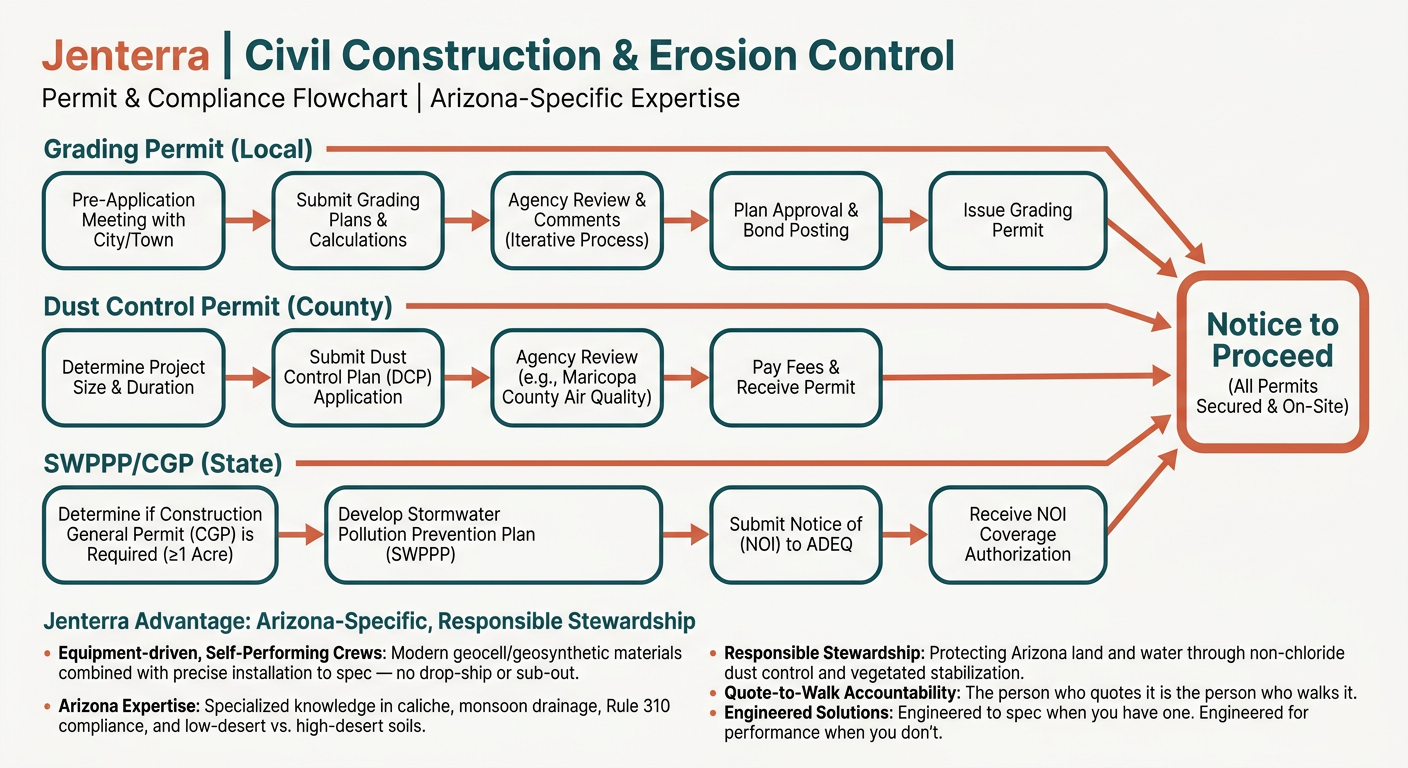
Arizona RV park development requires three primary permit categories: grading permits from your local jurisdiction, dust control permits under Maricopa County Rule 310 or equivalent county regulations, and SWPPP coverage under ADEQ's Construction General Permit (CGP) for sites disturbing one acre or more. Most developers need all three before breaking ground, with approval timelines ranging from two weeks to ninety days depending on site complexity and agency workload.
Navigating Arizona's permit landscape for RV park and campground projects demands more than paperwork—it requires understanding how grading plans, dust suppression, and stormwater controls interconnect on desert terrain. This guide walks developers and landowners through each permit type, timeline expectations, and the field practices that keep projects compliant from first cut to final inspection.
Arizona RV Park Development: The Regulatory Framework
Arizona's desert environment creates specific regulatory priorities that shape RV park permitting. Dust emissions, stormwater runoff during monsoon season, and soil disturbance on arid land each trigger distinct permit requirements. Understanding which agencies have jurisdiction—and where their requirements overlap—prevents costly delays and violations.
County and municipal governments issue grading and land-disturbance permits. Air quality agencies (Maricopa County Air Quality Department or ADEQ for other counties) govern dust control. ADEQ administers stormwater permits statewide. For larger projects, these three tracks run simultaneously, and each agency may condition approval on demonstrated compliance with the others.
When Permits Apply to RV Park Projects
Permit thresholds vary by jurisdiction, but most Arizona RV park developments trigger all three permit categories:
| Permit Type | Typical Threshold | Issuing Agency | Timeline |
|---|---|---|---|
| Grading Permit | 50–100 cubic yards of earthwork or 5,000+ sq ft disturbance | City/County Development Services | 2–6 weeks |
| Dust Control Permit | 0.1 acre (Maricopa) or 0.25 acre (other counties) | County Air Quality or ADEQ | 1–3 weeks |
| SWPPP/CGP Coverage | 1 acre or more of disturbance | ADEQ | 7–30 days after NOI |
A typical 20-pad RV park with internal roads and drainage improvements disturbs 3–8 acres, placing it firmly within all three permit requirements. Developers pursuing RV park site development should budget permit timelines into project scheduling before equipment mobilization.
Grading Permits for Arizona RV Park Construction
Grading permits regulate how earth is moved, shaped, and stabilized during construction. Arizona jurisdictions require engineered grading plans showing existing and proposed contours, drainage flow paths, cut/fill volumes, and erosion control measures. The permit ensures your site work meets local drainage standards and doesn't impact neighboring properties.
What Arizona Grading Plans Must Show
Grading plan requirements vary by jurisdiction, but most Arizona municipalities and counties expect:
- Existing topographic survey with 1–2 foot contour intervals
- Proposed finish grades for pads, roads, and drainage features
- Cut/fill quantities and balance calculations
- Drainage flow arrows and watershed delineation
- Erosion and sediment control locations keyed to a SWPPP
- Finished floor elevations for any structures
For RV parks, grading plans must demonstrate positive drainage away from individual pads toward collection points or detention areas. Pad slopes typically range from 1–3% depending on soil infiltration rates and local stormwater requirements. Internal roads need crown or cross-slope adequate for sheet flow without creating concentrated runoff that erodes adjacent areas.
Professional grading and site preparation translates engineered plans into field execution—laser-guided equipment achieving the slopes and elevations the permit specifies.
Common Grading Permit Conditions
Arizona grading permits often include conditions that affect construction sequencing:
- Dust control plan approval before permit issuance
- SWPPP prepared and on-site before earthwork begins
- Pre-construction meeting with the inspector
- Haul route designation for import/export material
- Working-hour restrictions (typically 6 AM – 6 PM in residential areas)
- Stabilization deadlines for disturbed areas left inactive
Maricopa County and most Valley cities require disturbed areas to be stabilized within 14 days if construction activity pauses. This prevents sites from becoming dust sources during project holds.
Maricopa County Rule 310: Dust Control Permit Requirements
Maricopa County's Rule 310 establishes dust control standards for construction sites, requiring permits for projects disturbing 0.1 acre (4,356 square feet) or more. The rule responds to the region's particulate matter air quality challenges—Arizona's fine, silty soils become airborne quickly when disturbed and dry.
Rule 310 Permit Classes
Dust control permits fall into categories based on disturbance size:
| Permit Class | Disturbance Area | Plan Requirements |
|---|---|---|
| Class I | 0.1 to 1 acre | Dust control plan required; less detailed |
| Class II | 1 to 5 acres | Detailed dust control plan with specific BMPs |
| Class III | 5+ acres | Comprehensive plan; may require dust monitors |
Most RV park projects fall into Class II or Class III, requiring detailed dust control plans that identify specific suppression methods, responsible parties, and response protocols for visible dust events.
Required Dust Control Measures
Rule 310 mandates that construction sites prevent visible dust emissions beyond property boundaries. Acceptable control methods include:
- Water application to unpaved surfaces and material stockpiles
- Chemical dust suppressants (soil stabilizers)
- Track-out prevention pads at access points
- Vehicle speed limits on unpaved roads (typically 15 mph)
- Stabilization of inactive disturbed areas
- Wind-event response protocols
The rule specifically addresses haul roads, material storage, earthmoving operations, and unpaved parking areas—all common features on RV park construction sites. Dust control services using plant-based suppressants provide Rule 310 compliance without introducing chloride compounds that can impact Arizona soils and groundwater over time.
Counties Beyond Maricopa
Pima, Pinal, and other Arizona counties have their own dust control regulations, though thresholds and requirements differ. ADEQ administers statewide air quality rules that apply where county programs don't exist. Developers building outside Maricopa should verify local requirements early—some rural counties have minimal dust regulations while others mirror Maricopa's standards.
SWPPP Requirements for Arizona Construction Sites
The Stormwater Pollution Prevention Plan (SWPPP) documents how your project will prevent sediment and pollutants from leaving the site in stormwater runoff. ADEQ requires SWPPP coverage under the Construction General Permit (CGP) for projects disturbing one acre or more.
SWPPP Document Components
A compliant Arizona SWPPP includes:
- Site description with maps showing disturbance boundaries, drainage patterns, and receiving waters
- Best Management Practice (BMP) selection with installation locations
- Inspection schedule and documentation procedures
- Maintenance protocols for each BMP type
- Spill prevention and response procedures
- Contractor training requirements
The SWPPP isn't filed with ADEQ—it stays on-site and must be available for inspector review throughout construction. Coverage under the CGP begins after submitting a Notice of Intent (NOI) and receiving confirmation from ADEQ.
BMP Selection for Arizona RV Park Sites
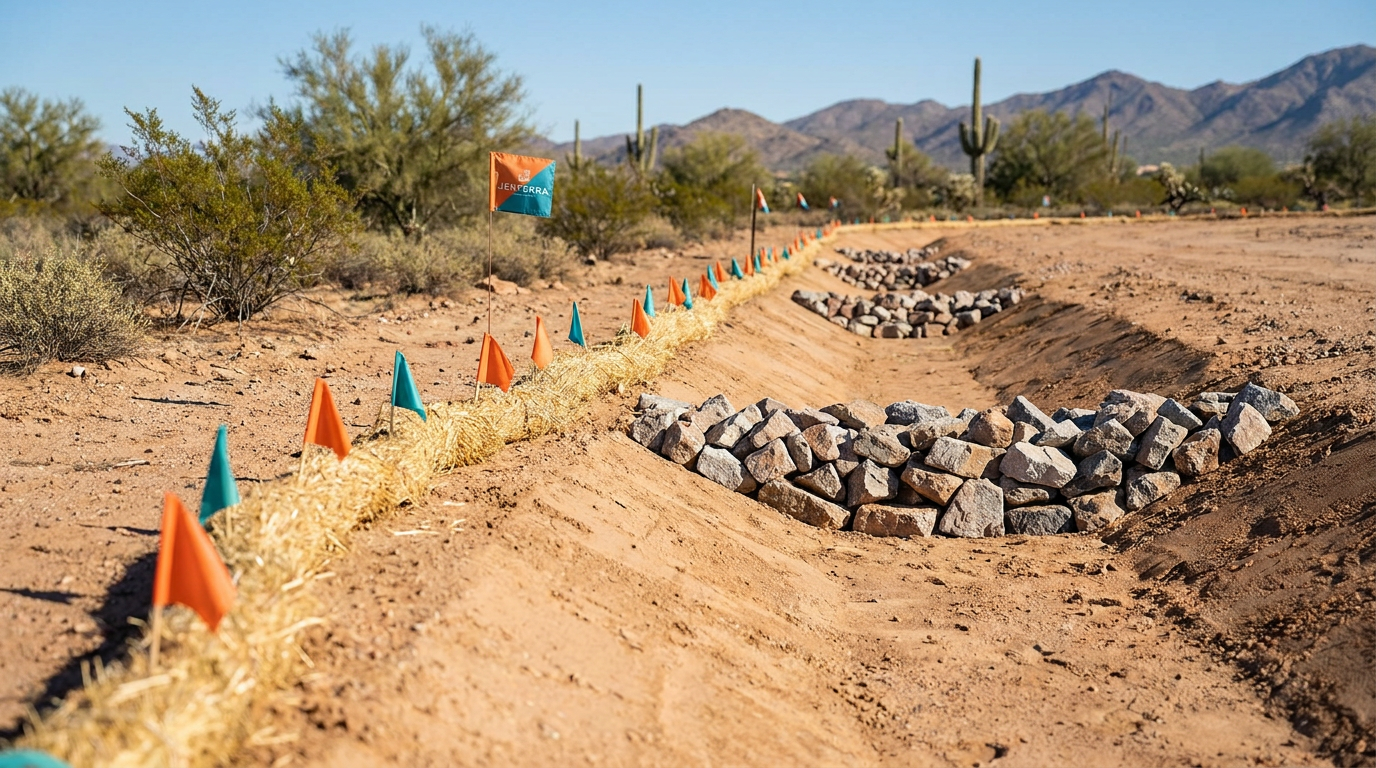
Arizona's monsoon season drives BMP selection. Intense summer storms can deliver 1–2 inches of rain in under an hour, overwhelming controls designed for gentler climates. Effective BMPs for RV park construction sites include:
| BMP Category | Common Applications | Monsoon Considerations |
|---|---|---|
| Sediment Barriers | Silt fence, wattles, sediment logs | Require higher-flow capacity; frequent maintenance |
| Inlet Protection | Drop inlet filters, gravel donuts | Must handle high-velocity flows without bypass |
| Stabilization | Erosion blankets, temporary seeding, gravel | Apply before monsoon season begins |
| Runoff Control | Diversion berms, check dams, detention areas | Size for 2-year/24-hour storm minimum |
Professional erosion and sediment control installation ensures BMPs perform as designed when monsoon intensity tests them. Sediment control products and erosion control blankets specified for Arizona conditions outperform generic materials that degrade under UV exposure or fail under high flows.
SWPPP Inspections and Maintenance
The CGP requires site inspections at minimum every 14 days and within 24 hours after storm events producing 0.25 inches or more of rainfall. Inspection reports must document BMP condition, maintenance performed, and any deficiencies requiring correction.
Deficiencies must be corrected within specified timeframes—typically 24 hours for sediment escaping the site, 7 days for other repairs. Maintaining inspection logs and photo documentation demonstrates good-faith compliance if questions arise during agency inspections.
Coordinating Permits: Timeline and Sequencing
Permit coordination separates projects that stay on schedule from those stuck waiting on approvals. Arizona RV park development typically follows this sequencing:
- Weeks 1–4: Submit grading permit application with dust control plan; begin SWPPP preparation
- Weeks 2–5: Submit dust control permit application (can parallel grading review)
- Week 4–6: Receive grading and dust control approvals; finalize SWPPP
- Week 5–7: Submit NOI to ADEQ; install initial perimeter BMPs
- Week 6–8: Receive CGP coverage confirmation; begin earthwork
This timeline assumes straightforward projects without significant engineering review comments or plan revisions. Complex sites—those with drainage challenges, proximity to washes, or caliche requiring hard-dig—may need additional review cycles.
Planning an Arizona RV park or campground project? Jenterra provides RV park site development with permit-compliant grading, dust control, and erosion BMP installation. The person who quotes it is the person who walks it. Request an estimate to discuss your project scope and timeline.
Arizona Soil Conditions and Permit Implications
Arizona's soil characteristics directly affect permit compliance strategies. Understanding what's beneath the surface helps developers anticipate costs and timelines.
Caliche and Hard-Dig Requirements
Caliche—calcium carbite-ceite hardpan common throughout central and southern Arizona—requires specialized excavation when encountered. Standard equipment may not penetrate dense caliche layers, and ripping or breaking this material generates significant dust. Grading permits sometimes require soil borings that reveal caliche depths, affecting earthwork cost estimates.
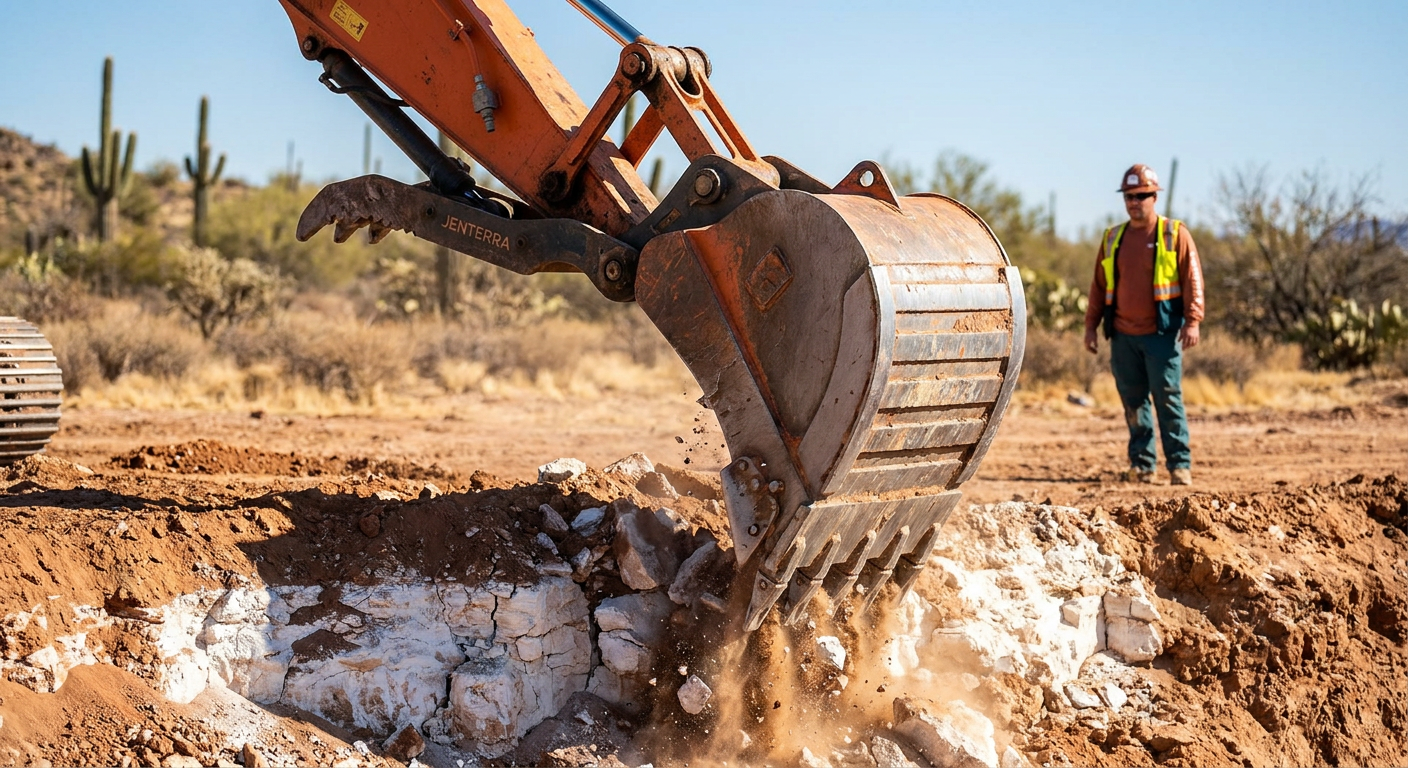
Excavation services experienced with Arizona conditions anticipate caliche and include hard-dig capabilities in project planning rather than treating it as an unexpected obstacle.
Monsoon Drainage Challenges
Arizona's intense monsoon storms demand drainage solutions that eastern design standards don't address. RV park grading must direct stormwater toward detention areas or permeable surfaces that prevent concentrated discharge. Detention basins and channels sized for Arizona storm intensities often exceed minimums adequate in milder climates.
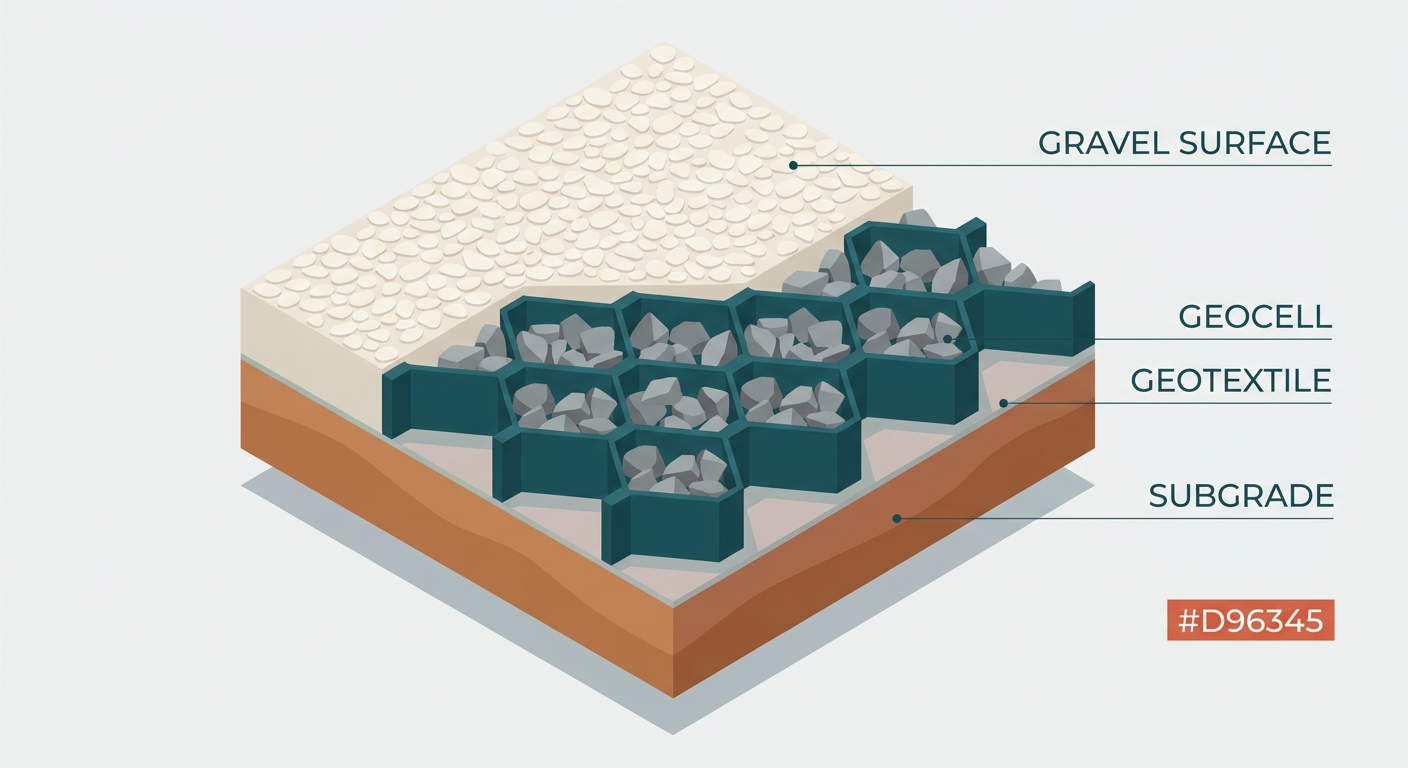
Permeable solutions—including geocell-stabilized gravel surfaces—reduce runoff volumes by allowing infiltration while maintaining stable driving and parking surfaces. This approach can reduce detention requirements and simplify SWPPP compliance.
Permit Violations and Enforcement
Understanding enforcement helps developers prioritize compliance efforts where risks concentrate.
Dust Control Violations
Maricopa County Air Quality conducts both scheduled and complaint-driven inspections. Violations for visible dust emissions carry fines ranging from several hundred to several thousand dollars per day, depending on violation severity and history. Repeat violators face escalating penalties and potential permit revocation.
Documented good-faith compliance efforts—including maintained inspection logs and responsive correction of issues—often influence enforcement outcomes when violations occur.
Stormwater Violations
ADEQ enforcement for CGP violations includes administrative orders, penalty assessments, and referral to EPA for significant violations. Sediment discharges to waters of the state trigger the most serious enforcement actions. Civil penalties can reach $25,000 per day per violation under Clean Water Act provisions.
More commonly, inspectors issue compliance orders requiring corrective action. Maintaining current SWPPPs, completing inspections on schedule, and documenting BMP maintenance demonstrates the operational control ADEQ expects.
Working with Permit-Experienced Contractors
Permits define requirements; field execution determines compliance. Contractors experienced with Arizona permit frameworks understand the practical translation between plan documents and construction practices.
Key questions when evaluating earthwork contractors for permit-sensitive projects:
- Do they self-perform grading, dust control, and BMP installation with their own crews?
- Can they demonstrate familiarity with local jurisdiction requirements?
- Will the person who quotes the work supervise field execution?
- Do they maintain inspection documentation that supports your compliance files?
Jenterra's approach—self-performing crews that specify and install to spec—eliminates the coordination gaps that create compliance problems when multiple subcontractors share permit responsibilities. Our Arizona-based operations reflect daily familiarity with Maricopa County Rule 310, ADEQ's CGP requirements, and the monsoon drainage realities that drive practical BMP selection.
Reviewing our erosion control and sitework services shows how these capabilities integrate for projects requiring coordinated permit compliance.
Additional Resources
Developers benefit from direct agency engagement early in project planning. Key resources include:
- ADEQ's Construction Stormwater Program provides CGP guidance documents and NOI forms
- Maricopa County Air Quality's Rule 310 page includes permit applications and dust control plan templates
- Municipal development services departments offer pre-application meetings to clarify grading requirements
For projects in the Scottsdale area, the city's expedited review programs can accelerate grading permits for qualifying projects. Rural projects near Flagstaff face different soil and climate conditions that affect gravel road construction and drainage approaches.
Next Steps for Your Arizona RV Park Project
Permit compliance starts before the first application. Understanding what each agency requires—and how grading, dust control, and stormwater obligations interconnect—positions projects for efficient approvals and trouble-free construction.
Jenterra works with developers and landowners on Arizona RV park and campground projects requiring coordinated earthwork, dust control, and erosion BMP services. Woman-owned and Arizona-based, our self-performing crews bring the equipment, materials, and permit-aware field practices that keep projects moving.
Ground shaped with purpose.
Call to schedule a site walk and discuss your project's permit and execution requirements. The person who quotes it is the person who walks it.