
Services
Geocell Ground Stabilization
Weak subgrade doesn't have to mean an expensive dig-out. We install engineered geocell that confines the fill and spreads the load — turning soft, rutting ground into a surface that carries trucks, often with less aggregate than a conventional section. We grade the base, lay and lock the panels, infill, and compact. One crew, one accountable result.
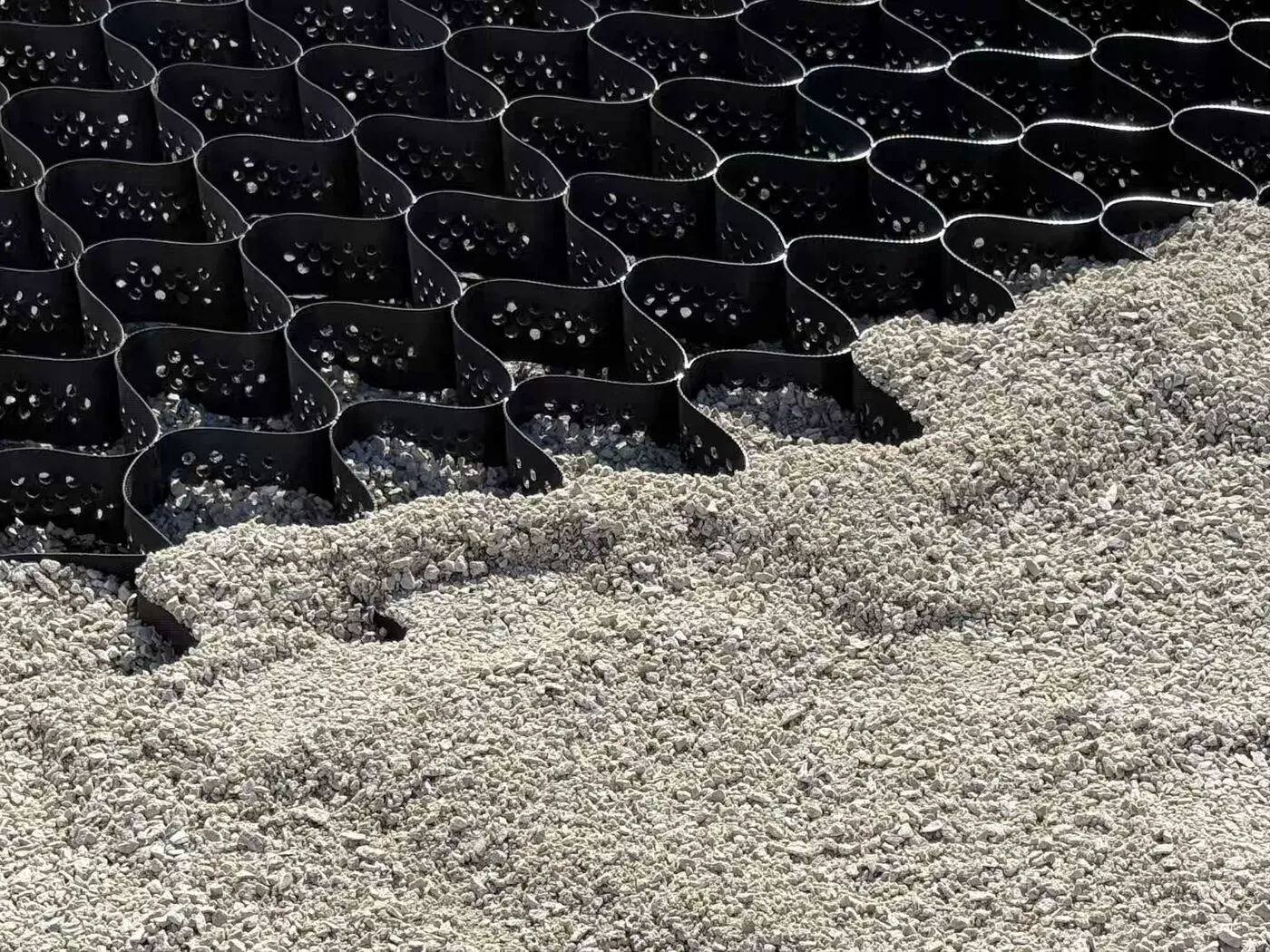
What geocell does
Geocell is a honeycomb of welded panels that confines infill so it can't shove sideways under wheel load. Confinement turns loose aggregate into a semi-rigid mattress that distributes pressure across a wider area of subgrade — the reason a thinner section can carry more.
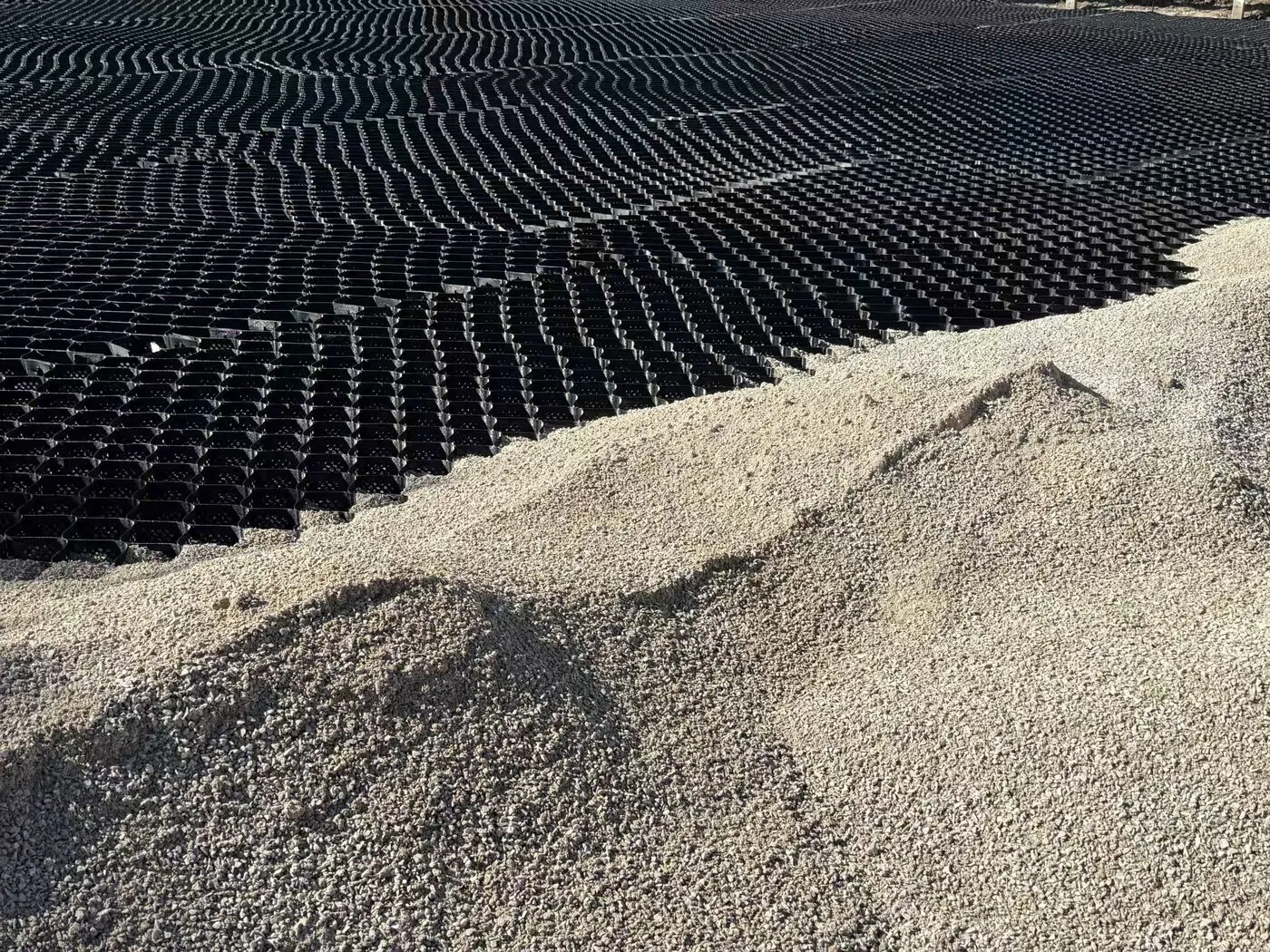
Where it's used
Anywhere the ground is weaker than the traffic it has to carry.
- Construction and permanent access roads
- Parking, laydown yards, and equipment pads
- Driveways and gravel roadways over soft subgrade
- Slope and channel armoring
How we install it
Grade and prepare the base, place separation geotextile where the subgrade calls for it, expand and stake the panels to layout, infill with the specified aggregate or soil, then compact. Every step self-performed, so the section that gets built is the section that was specified.
Slope & channel use
On slopes and channel banks, geocell holds soil and infill in place under flow and lets vegetation establish through the cells — lighter and less disruptive than trucking in riprap.
Frequently asked questions
- What is a geocell?
- A three-dimensional honeycomb panel, usually HDPE, that confines soil or aggregate so it spreads load instead of displacing under traffic.
- How much aggregate can geocell save?
- Manufacturers report meaningful reductions in section thickness for the same load rating because confinement improves load distribution. Actual savings depend on subgrade strength and traffic, so we size it to your conditions rather than quoting a headline number.
- Will it hold heavy equipment?
- Yes, when it's designed and installed for that load — correct cell depth, correct infill, correct compaction. That's the part we control by self-performing the install.
Tell us your site. We'll send an estimate.
Scope, location, timeline — and whether you need materials, installation, or both. We respond with clear next steps.