Geocells explained: a stronger foundation for the surface above
How cellular confinement holds infill in place, and what to consider for roads, parking areas and slopes.
By Jenterra · · 3 min read
What geocells do
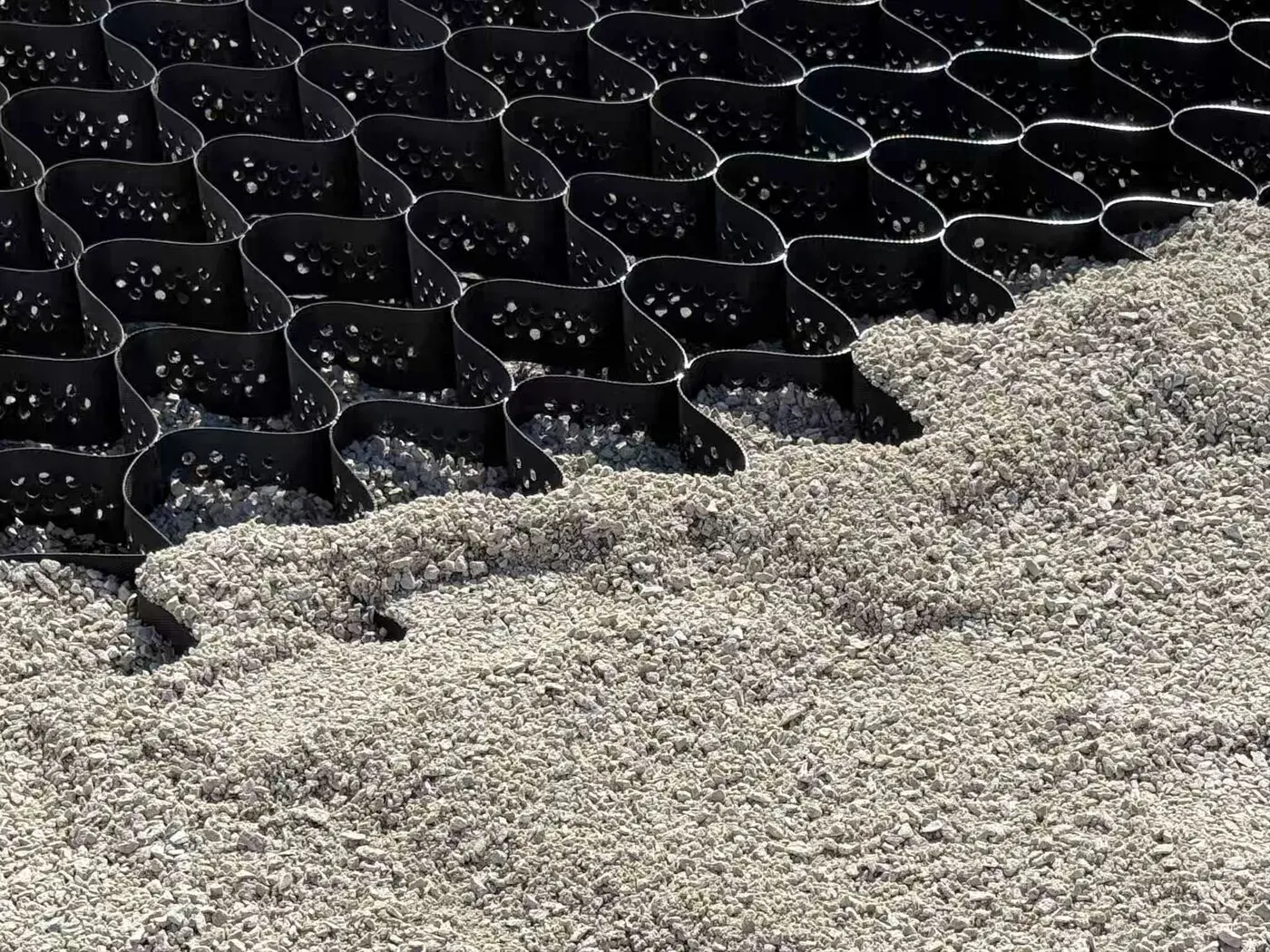
Geocells are expandable, honeycomb-shaped panels that confine infill. Instead of leaving aggregate free to move sideways under load, the cells hold it within a connected structure. The system helps distribute loads across the prepared ground below.
Geocells can be part of access roads, parking areas, slope protection and channels. The appropriate panel, infill and installation details depend on the intended use and the project specifications.
The system starts below the panels
A geocell installation is more than a layer of panels. Subgrade preparation, drainage, separation fabric where specified, anchoring and infill all contribute to the finished system. Panels are expanded over the prepared base, secured and filled before the surface is finished to the required grade.
The specified infill may be aggregate, soil for vegetation or concrete. Those choices serve different purposes. A vegetated slope and a heavily trafficked access route should not be treated as interchangeable designs.
Permeability depends on the whole assembly
For a permeable surface, consider the infill, the underlying soil and the drainage path together. Geocells do not make every surface permeable simply by being present. Water still needs a route through or away from the finished assembly.
Material efficiency and future maintenance should also be considered in the design. Confirm the required section and expected traffic rather than assuming a standard thickness fits every site.
Bring the site details to the conversation
Share the intended use, expected traffic, soil conditions, drainage concerns and any engineered plans. Jenterra can scope geocell ground stabilization against an existing specification or work with the project team to define the system when a design is still needed.